






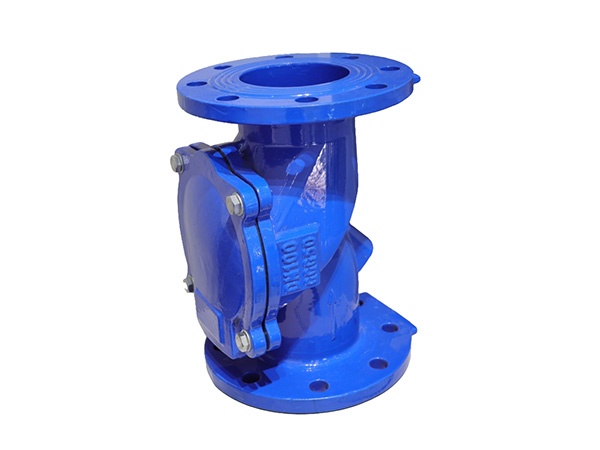
Rubber Flap Check Valve
The rubber flap check valve, also named rubber duckbill check valve, is a flexible one-way flow control device designed for sewage, drainage, flood discharge and low-pressure water pipelines. Distinct from metal disc check valves with rigid internal moving parts, this valve uses an integrated elastic rubber flap as the core sealing component. It opens automatically under forward fluid pressure and tightly closes relying on the rubber’s own elasticity and backflow pressure to block reverse medium. Featuring no metal hinge, zero mechanical friction and excellent anti-clogging performance, it has become the mainstream anti-backflow equipment for municipal sewage networks, rainwater pipelines and wastewater treatment projects.
Its unique flexible flap structure is the biggest innovation compared with swing or silent check valves. The whole valve body is equipped with an integrally molded rubber lining and a one-piece rubber flap inside. When liquid flows forward, the medium pushes the soft rubber flap to expand outward, forming a large unobstructed flow channel with ultra-low flow resistance. Once the fluid flow stops or reverse pressure occurs, the elastic rubber flap rebounds instantly and closely fits the valve seat without gaps, achieving complete shutoff against backflow, sediment and floating debris. Without any metal hinge pin, guide shaft or spring inside, the valve thoroughly avoids common faults such as hinge rust, spring fatigue and jamming caused by dirt accumulation, which frequently trouble traditional metal check valves.
Outstanding anti-blocking capability makes this valve irreplaceable for wastewater containing sediment, sludge, leaves and domestic garbage. Rigid metal check valves are easily stuck by solid impurities, leading to incomplete closing and continuous backflow. The flexible rubber flap can deform to bypass small particles and sundries during water flow, and the wide straight-through cavity rarely stores dirt. Even in seasonal dry pipelines with long-term static standby, the rubber flap will not get stuck or fail to reset due to rust or scaling, greatly reducing on-site inspection and cleaning frequency for underground buried pipelines.
In terms of material matching, the main valve body is available in ductile iron, cast iron and stainless steel, covered with thick epoxy coating for underground anti-corrosion. The core rubber flap is made of high-toughness EPDM or neoprene rubber, featuring outstanding aging resistance, wear resistance and acid-alkali resistance. It can withstand long-term immersion in domestic sewage, industrial wastewater and rainwater without cracking or permanent deformation. The product meets PN6 and PN10 pressure grades, passing strict sealing and aging tests to comply with municipal engineering standards, ISO9001 and CE certification. Multiple connection types including flange, wafer and socket end are supplied to match buried pipes, drainage pipes and pump outlet pipelines.
Installation and maintenance costs are significantly lower than metal check valves. The lightweight integrated structure simplifies pipeline layout, supporting horizontal and vertical installation without direction limits. There are no precision wearing parts inside, so regular lubrication and component replacement are unnecessary. For urban flood discharge pipelines, river outlet culverts and community sewage lifting stations, it effectively prevents river water, rainwater and sewage from flowing backward into residential pipe networks during heavy rains, avoiding waterlogging and environmental pollution.
With flexible rubber sealing, anti-clog design, maintenance-free operation and strong corrosion resistance, rubber flap check valves are widely applied in municipal drainage, sewage treatment plants, flood control pipelines, residential underground drainage and industrial wastewater discharge systems. As a cost-effective anti-backflow solution for dirty medium pipelines, it provides stable long-term protection for urban drainage infrastructure and greatly reduces pipeline operation risks.
 BLOGS
BLOGS
-
Understanding Resilient Seated Gate Valves in Water Systems
2026-07-06 11:02:49
-
Metal Seated Gate Valves: Features and Industrial Applications
2026-07-06 11:00:39
-
What Are Hydraulic Control Valves and How Do They Work?
2026-07-06 10:58:09
-
What Makes Grooved End Gate Valves Popular in Piping Systems?
2026-07-06 10:53:41
CONTACT US