






Advantages of Grooved End Gate Valves in Modern Projects
Author:bohansi Time:2026-08-27 14:14:33 Click:161
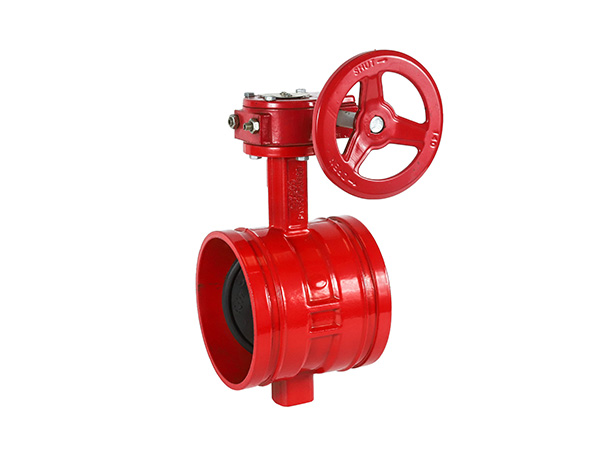
Ask a project engineer what they need from a main isolation valve and the answer rarely varies: reliable shutoff, minimal pressure drop, and installation that does not slow the job down. Grooved end gate valves satisfy all three, and that is why their presence on valve schedules has grown steadily over the past two decades. They combine the full-port geometry of a traditional wedge-gate valve with grooved mechanical coupling ends, delivering the isolation performance that pump engineers and process engineers trust while removing the bolted flange from the critical path on site.
Full-Port Geometry: Why It Still Matters
A grooved end gate valve uses a solid or flexible wedge that retracts completely into the bonnet when open, leaving the full pipe bore clear. The practical benefit is minimal pressure drop, which matters most on pump suction lines, gravity flow systems, and anywhere that available head is tight. A butterfly valve, by contrast, always presents a disc obstruction to the flow, adding a permanent pressure loss even in the fully open position. For primary isolation points where flow efficiency is a design requirement, gate valves in general and grooved end gate valves specifically remain the preferred choice among experienced engineers who have learned the difference through field measurement.

Grooved Ends Versus Flanges: The Installation Contrast
Connecting a flanged gate valve requires aligning bolt holes, installing two gaskets, threading and torquing multiple bolts in sequence, and verifying the joint is clean and leak-free before pressurizing. A grooved end gate valve eliminates all of that. The valve is placed between pipe ends, the coupling housing is slipped over the grooves, and the bolt-and-nut assemblies are hand-tightened until the gasket seals. A single spanner is the only tool needed, and the entire joint takes a few minutes regardless of size. For a project with hundreds of isolation points, this labor reduction is substantial, and it is the primary driver behind the strong preference contractors show for grooved valves on commercial projects.
Flexible Couplings Absorb Movement and Stress
The mechanical coupling used with a grooved end gate valve is not a rigid joint; it provides a defined amount of angular deflection, axial movement, and radial separation within its design range. This flexibility is valuable wherever thermal expansion creates pipe movement, where pump vibration transmits through the system, or where minor misalignment would otherwise load the valve body with bending stress. In practice, flexible couplings extend the service life of the valve's internal components by reducing the cyclic stresses that lead to fatigue, and they protect flange gaskets on adjacent connections by limiting the forces transmitted through the piping.
Maintenance Simplicity and Speed
When a valve needs replacing, the grooved connection makes the job straightforward. The couplings are loosened, the valve is lifted out, a replacement is dropped in, and the couplings are retightened. There is no hot work, no flange disassembly, and no waiting for cutting and threading equipment. For industrial plant operators running shutdown maintenance on tight schedules, this speed is operationally significant. It means maintenance crews can complete more valve replacements per shift, reducing the total cost of each intervention and the cumulative downtime across the plant. Many industrial valve suppliers now offer grooved end gate valves in their standard lines specifically because plant customers request them for exactly this reason.
Applications Where the Combination Works Best
Grooved end gate valves are not suited to every application, but where they fit, they fit well. They are the standard choice for chilled water and heating hot water isolation in commercial buildings, where pump efficiency and compact installation both matter. They appear throughout fire protection mains, where the grooved connection's flexibility is an asset in seismic zones and where speed of installation directly affects project timelines. Industrial cooling towers, process water loops, and utility distribution systems also benefit from the combination of full-port flow and grooved installation. In every case, the specification is driven by engineers who have learned from experience that gate valves belong on pump discharge and grooved ends belong in the field.
Material and Rating Considerations
Standard production for grooved end gate valves uses ductile iron bodies with fusion-bonded epoxy coating, EPDM or NBR resilient seating, and stainless steel stems, with working pressure ratings of 175 to 300 PSI depending on size and manufacturer. For higher pressure or temperature requirements, flanged gate valve alternatives are more appropriate, as the mechanical coupling pressure ratings cap out below Class 600. When specifying, confirm the coupling pressure rating matches the valve rating, check the temperature limits of the gasket material against your service, and verify that the stem material is suitable for your fluid. A reputable supplier will provide full material data sheets and pressure-temperature charts without prompting.
How to Specify for a New Project
Writing a tight specification for grooved end gate valves starts with the service conditions: maximum working pressure, temperature range, fluid, and any relevant standards such as AWWA for water service or NFPA for fire protection. State the required face-to-face dimension if space is constrained, note the need for OS&Y or non-rising stem configuration, and include the coupling specification, usually Victaulic or equal. Require test certificates for shell and seat hydrostatic testing, and specify third-party inspection if the project delivery schedule and quality requirements warrant it. Engineers who provide this level of detail in their enquiries receive better responses from suppliers, and they avoid the valve surprises that come from underspecified valves arriving on site.
FAQ
What is the difference between a grooved end gate valve and a flanged gate valve?
The core valve design is identical; the difference lies in the end connection. A flanged valve uses bolted flanges to join to adjacent pipe, while a grooved end gate valve uses a mechanical coupling that snaps over grooved ends, reducing installation time and providing flexibility.
Can grooved end gate valves handle high-pressure steam?
Standard grooved couplings are rated to roughly 300 PSI, which limits use in high-pressure steam to lower-temperature saturated steam applications. For high-pressure or high-temperature steam above about 200 PSI, a flanged or welded-end metal seated gate valve is the appropriate choice.
Are grooved end gate valves suitable for buried service?
Yes, with extended stems for surface operation and appropriate corrosion protection on the couplings. Wrapped or shrink-sleeved couplings are standard for buried installation, and the flexible joint is actually an advantage in backfill conditions where ground movement occurs.
What coupling type should be specified with these valves?
Flexible couplings are generally preferred because they accommodate pipe movement and reduce stress on the valve body. Rigid couplings can be specified where maximum joint strength is needed, such as pump discharge, but most applications benefit from the flexibility of standard mechanical couplings.
How do I size a grooved end gate valve for my project?
Sizing follows the same logic as any gate valve: match the nominal size to the pipe size based on flow requirements and acceptable velocity. Full-port designs have minimal additional pressure drop, so oversizing for pressure drop reasons is unnecessary. Verify the valve is available in your required size and pressure class from your chosen manufacturer.
Conclusion
Grooved end gate valves bring together two proven technologies in a combination that genuinely improves on both parts individually. The full-port gate mechanism satisfies the isolation and flow efficiency requirements that process and pump engineers demand, while the grooved mechanical coupling delivers installation speed, flexibility, and maintenance simplicity that contractors and plant operators value. For commercial building services, fire protection systems, and industrial utility piping, these valves deserve a prominent place on the valve schedule. Procurement teams who understand the total installed cost advantage, and engineers who appreciate the performance details, will find grooved end gate valves the most practical choice for the majority of isolation applications.
References
American Water Works Association, AWWA C606: Grooved and Shouldered Joints.
Skousen, P. L., Valve Handbook, 3rd edition, McGraw-Hill Education.
National Fire Protection Association, NFPA 24: Standard for the Installation of Private Fire Service Mains.
Nesbitt, B., Handbook of Valves and Actuators, Elsevier Butterworth-Heinemann.
 HOT PRODUCT
 CONTACT US