






Why Wafer Butterfly Valves Are Widely Used
Author:bohansi Time:2026-08-27 14:16:47 Click:175
Walk through any water treatment plant, commercial tower mechanical room, or process plant utility corridor and count the valve types you see. If the building was built in the last thirty years, the wafer butterfly valve will outnumber everything else combined. That is not an accident or a fashion; it reflects a set of genuine engineering and economic advantages that have made these quarter-turn devices the default isolation choice for a huge range of industrial and building services. Understanding why they dominate helps when you are writing a specification, reviewing a valve schedule, or deciding whether to accept the lowest price on a procurement enquiry.
The Core Design: Simple, Compact, Reliable
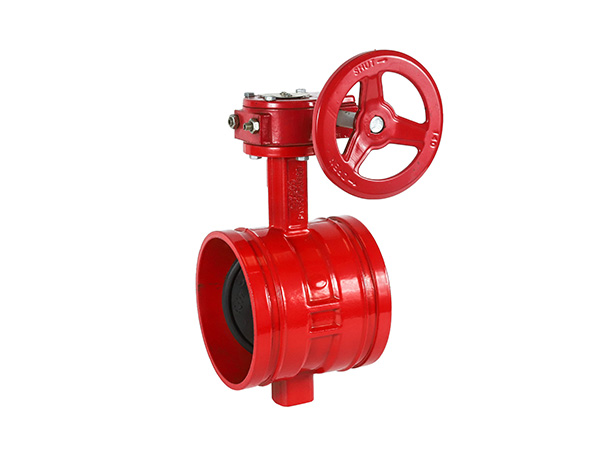
A wafer butterfly valve consists of a flat, wafer-thin body that slides between two pipe flanges, a disc mounted on a central shaft, and an elastomeric seat that the disc seals against when closed. Rotating the disc through 90 degrees takes it from fully open to fully closed. The simplicity of this mechanism is the foundation of its success: fewer moving parts mean fewer failure modes, and a compact body means the valve fits in spaces where a gate valve or globe valve simply cannot go. The quarter-turn operation also makes it easy to automate with a rotary actuator, which is why so many modern plants specify motorized wafer valves for remote or automated control.

Size and Weight: The Economies of Scale
Beyond a certain pipe size, typically around 150 mm, the cost advantage of wafer butterfly valves becomes significant and grows rapidly. A 300 mm flanged gate valve can weigh over 200 kilograms, requires heavy supports, costs substantially more in material and casting, and needs a gear operator or actuator to handle the torque. A wafer butterfly valve of the same size might weigh 40 kilograms, fits in the hand, and costs a fraction of the gate valve price. This is why engineers writing valve schedules for large-diameter piping almost always reach for wafer or lug butterfly valves first, and why plant operators replacing old gate valves with modern equivalents frequently discover they can reduce both cost and weight by switching to butterfly designs.
Pressure Drop Reality
The one honest disadvantage of wafer butterfly valves is pressure drop. Even in the fully open position, the disc sits in the flow stream, adding a measurable resistance. In practice, this means a butterfly valve adds roughly 0.2 to 0.5 bar of pressure loss in the open position, depending on disc design and velocity. For most building services with reasonable pump head, this is perfectly acceptable. For pump suction lines, long gravity feeds, or systems with tight head budgets, this loss can matter, and experienced engineers either specify full-port gate valves for those locations or accept the trade-off consciously. The key is knowing which situation you are in before you write the valve schedule.
Where Wafer Designs Work Best
The wafer body form is ideal for installation between two mating flanges in a pipeline where the valve does not need to be removed for end-of-line service. Typical applications include isolation on water mains, cooling tower connections, HVAC coil branches, chemical process lines, and utility distribution. Sizes range from 40 mm through 300 mm for standard designs, with larger fabricated or double-offset designs extending to well over 600 mm for utility and water works applications. For anything other than end-of-line isolation, a wafer valve installed between companion flanges provides a secure, centered installation that has been the standard in building services for decades.
Seat Materials and Media Compatibility
The elastomeric seat is the part that determines whether a wafer butterfly valve survives in a given service. EPDM is the workhorse for cold and hot water, steam condensate, and many dilute chemical services, with a temperature range of roughly -30°C to 120°C and good resistance to a wide range of process fluids. NBR nitrile handles petroleum products and mineral oils well. PTFE and special polymer seats extend temperature capability and chemical resistance for more demanding applications. When specifying, always confirm seat compatibility with the actual fluid, including any trace contaminants or temperature excursions, and do not rely on general-purpose compatibility charts alone.
Wafer Versus Lug: Which Body Style to Choose
The wafer body is the slimmer, cheaper option, but it requires flange bolts to pass through and hold the valve centered in the line. It cannot serve as an end-of-line isolation valve because the body has no bolt holes beyond the flange face. The lug-style wafer butterfly valve, which has threaded bolt holes extending through the valve body, can be installed with bolts on one side only and used as a true end-of-line valve with the opposite flange removed. For most in-line isolation duties, the wafer body is sufficient and more economical. For maintenance isolation points or situations where downstream pipe must be drained while the upstream side remains pressurized, lug body style is the safer and more flexible choice.
Automation and Actuation Compatibility
One of the reasons wafer butterfly valves are so widely used in modern plants is their near-universal compatibility with actuation. ISO 5211 defines a standardized mounting flange and driveshaft configuration, and virtually all manufacturers build to this standard, which means an electric motor operator, pneumatic actuator, or gear operator from any major actuation supplier will bolt directly onto the valve without custom fabrication. This standardization simplifies procurement, reduces spare parts inventory, and makes field interchangeability straightforward. For plants with standardized actuation programs, specifying wafer butterfly valves across all sizes from DN40 to DN300 makes operational and maintenance sense.
FAQ
What is the difference between a wafer and a lug butterfly valve?
A wafer valve fits between flanges with bolts passing through, and cannot serve as an end-of-line valve. A lug valve has threaded bolt holes extending through the body, allowing it to be bolted on one side only and used as a true end-of-line isolation valve with the downstream flange removed.
Can wafer butterfly valves handle high pressures?
Standard wafer butterfly valves are rated to 200 to 300 PSI depending on size and manufacturer. High-performance double-offset and triple-offset designs extend ratings to 740 PSI and beyond for more demanding process applications. Always check the pressure-temperature rating on the manufacturer's data sheet for your specific size and material combination.
Why do wafer butterfly valves have higher pressure drop than gate valves?
The disc sits in the flow path even when open, creating obstruction that a full-port gate valve does not. This is an inherent characteristic of butterfly valve design. For applications where pressure drop is critical, a gate valve or full-port ball valve is a better choice despite the higher cost and weight.
How do I prevent water hammer with butterfly valves?
Water hammer occurs when rapid valve closure causes a pressure surge. To minimize it, use slow-closing actuators on large valves, select spring-return pneumatic actuators with adjustable closing speed, and avoid fully closing large valves against high-velocity flow in one motion.
What maintenance do wafer butterfly valves require?
Minimal for most services. The seat is resilient and self-compensating, the bearings are typically self-lubricating, and the disc rotates only 90 degrees. Annual cycling and periodic inspection of the stem seal are sufficient for most industrial water and HVAC applications. In abrasive or high-cycle service, more frequent inspection of the seat and bearings is advisable.
Conclusion
Wafer butterfly valves dominate industrial valve installations for straightforward reasons: they are compact, inexpensive in larger sizes, quick to actuate, simple to automate, and reliable when properly specified for the service. The trade-off is pressure drop, which engineers must account for in their hydraulic calculations, and the limitation that they are not suited for end-of-line isolation unless lug-style bodies are specified. For the majority of isolation duties in water, HVAC, and light industrial services, wafer butterfly valves offer the best combination of cost, performance, and ease of installation available. Engineers and procurement teams who understand their strengths and limitations will use them confidently and appropriately across a wide range of applications.
References
American Society of Heating, Refrigerating and Air-Conditioning Engineers, ASHRAE Handbook: HVAC Systems and Equipment.
Skousen, P. L., Valve Handbook, 3rd edition, McGraw-Hill Education.
Nesbitt, B., Handbook of Valves and Actuators, Elsevier Butterworth-Heinemann.
International Society of Automation, ISA-75.08.01: Face-to-Face Dimensions for Flanged Butterfly Valves.
 HOT PRODUCT
 CONTACT US