






Essential Valve Types Used in Industrial Piping Systems
Author:bohansi Time:2026-09-09 15:12:01 Click:78
Every industrial piping system, whether it moves chilled water through a factory, raw water through a treatment plant, or process fluid through a chemical line, depends on a handful of valve designs to start flow, stop flow, protect equipment, and regulate conditions. A valve is a simple idea, a controllable restriction in the line, but the engineering choices inside that restriction determine whether a system operates for decades or fails in its first year. This article maps the essential valve types used in industrial piping systems and explains the logic engineers apply when selecting them.
What Valves Do in a Piping System
Before comparing designs, it helps to separate valve duties into three groups. Isolation valves are either fully open or fully closed; their job is to seal off a section of pipe for maintenance, emergency response, or reconfiguration. Check valves allow flow in one direction only and protect pumps, compressors, and meters from reverse flow. Regulating valves modulate flow or pressure while the system runs. Most of the essential valve types used in industrial piping systems belong clearly to one of these groups, and a design that is excellent at one duty is often poor at another.
Gate Valves: The Workhorse of Isolation Duty
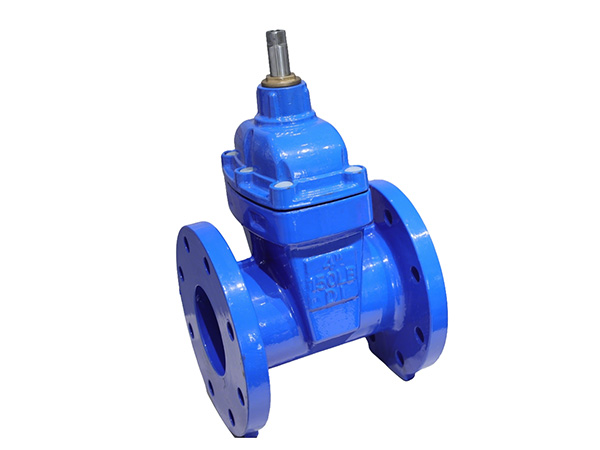
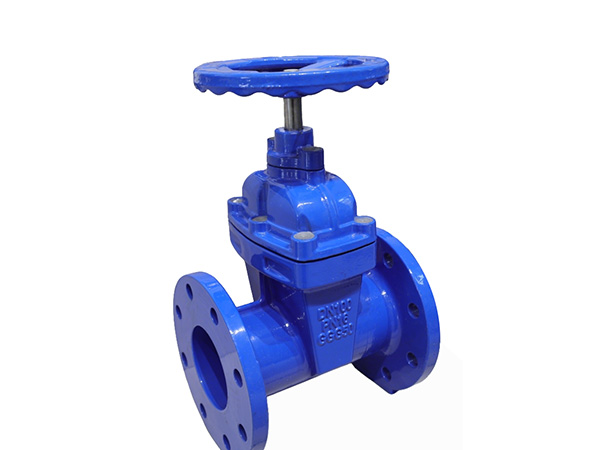
A gate valve isolates flow by lowering a wedge or disc across the bore. When fully open, the gate retracts completely into the bonnet, leaving a straight, unobstructed passage that produces virtually no pressure loss. That full-bore characteristic is why gate valves remain standard for pump suction lines, water mains, and any service where flow efficiency matters more than speed of operation. Their weakness is the opposite of their strength: the multi-turn stem means slow opening and closing, and they are not designed for throttling, since a partially open gate erodes quickly and vibrates.
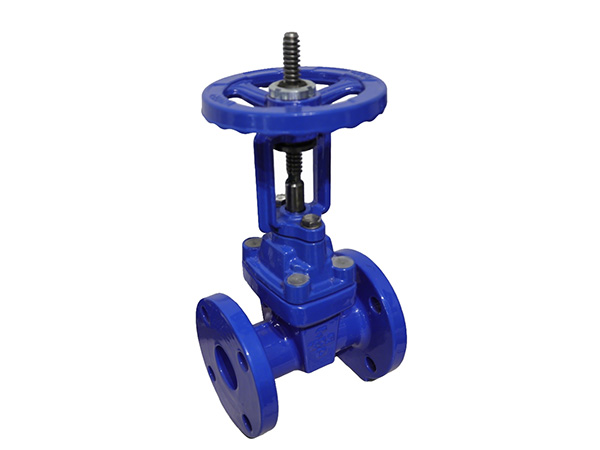
Gate valves appear in two broad material families. Resilient seated gate valves, with an elastomer-coated wedge, deliver bubble-tight shutoff in water service and resist corrosion, making them the dominant choice for municipal and building water networks. Metal seated gate valves, built in carbon or alloy steel with machined seating surfaces, handle the high temperatures and abrasive conditions of steam, hydrocarbon, and power plant service. The operating stem may rise with the gate (OS&Y, or outside screw and yoke) for a visible open position, or stay fixed with the gate moving on internal threads (non-rising stem) for installations with limited headroom or buried valves operated from above.


Ball Valves: Quarter-Turn Speed and Tight Sealing
The ball valve uses a perforated sphere that rotates a quarter turn to open or close the bore. This design offers three advantages that explain its popularity: rapid operation, dependable sealing, and a straight-through flow path. Ball valves are available in floating designs, where line pressure pushes the ball against the downstream seat, and trunnion-mounted designs, where the ball is held top and bottom for lower operating torque in large sizes and high-pressure service. Full-bore versions match the pipe internal diameter and produce minimal pressure drop, while reduced-bore versions cost less where some restriction is acceptable.
Ball valves suit gas, compressed air, and clean liquid services, and their quarter-turn action makes them easy to automate with electric or pneumatic actuators. The main limitation is the cavity between the ball and body, which can trap process fluid; for services where trapped media is a concern, manufacturers offer cavity-filled or special seat designs. In industrial piping, the ball valve is frequently chosen where frequent operation and fast response matter more than the straight-through economy of a gate valve.
Butterfly Valves: Compact Quarter-Turn Isolation
A butterfly valve controls flow with a disc that rotates on a shaft across the bore. Fully open, the disc aligns with the flow; a quarter turn seats it against an elastomeric liner to shut the line. The design is light, short in face-to-face length, and economical in large diameters, which is why butterfly valves outnumber other types in water treatment plants, cooling water systems, and commercial HVAC above roughly DN150. Wafer bodies fit between flanges, lug bodies allow end-of-line isolation, and grooved-end versions connect with mechanical couplings for fast installation. Where higher performance is required, double-offset and triple-offset butterfly valves use metal or fire-safe seats for elevated temperature and pressure service.
The honest trade-off is that the disc remains in the flow path even when open, adding a small permanent pressure drop, and standard resilient-seated designs are intended for isolation rather than continuous throttling. Engineers who understand these limits specify butterfly valves where space, weight, and installed cost dominate, and turn to other types where pressure drop tolerance is tight or severe service conditions apply.
Check Valves: Automatic Protection Against Reverse Flow
Check valves are the only essential valve type that operates without an operator or actuator. The closure element, whether a hinged disc, a vertically lifting disc, a ball, or spring-loaded plates, opens under forward flow and closes when flow reverses or stops. Swing check valves offer low pressure drop and suit steady flow in horizontal lines. Dual-plate (wafer) check valves close quickly with springs, making them a common choice for pump discharge where water hammer is a concern. Silent or axial check valves close before reverse flow fully develops and are specified where surge must be minimized.
Selection mistakes with check valves usually involve orientation and service. Swing checks require horizontal or upward-flow vertical installation; spring-loaded designs tolerate more positions. Media matters as well: dirty or viscous fluids can foul hinge pins or coat seats, so slurry and oil services often favor ball or specialized designs. Whatever the type, the valve must be sized so forward flow holds it fully open; a check valve that never fully opens wears out its seat and hinge quickly.
Regulating Valves: When Modulation Is the Job
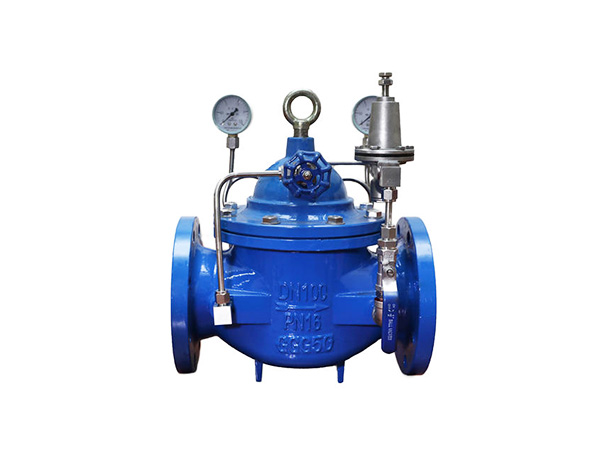
Where the task is continuous adjustment of flow or pressure, globe valves and control valves take over from isolation designs. The globe valve changes direction of flow inside the body, which creates higher pressure drop but gives it a precise throttling characteristic and a seating geometry that survives repeated modulation. Many plants use globe valves for manual regulation and bypass duty. Where automatic control is required, control valves with characterized trims and actuators respond to signals from pressure, temperature, or level controllers. These valves are engineered products selected with flow calculations that an isolation valve never requires.
Body Materials, End Connections, and Pressure Classes
Valve type is only half the specification; the same design is manufactured across a wide range of materials and connection styles. Common body materials include cast iron and ductile iron for water and building services, carbon steel for general industrial and steam service, stainless steel for corrosive and hygienic processes, and bronze for smaller or marine applications. End connections follow the piping standard: flanged ends (ASME B16.5 or EN 1092), threaded ends for small bore, grooved ends for mechanical coupling systems, and butt-weld ends for permanent high-pressure joints. Pressure classes and temperature ratings must be checked together, because most valves derate as temperature rises. A specification that fixes nominal size without confirming pressure class, end connection, and body material leaves too much room for error.
Standards and Testing: The Buyer's Safety Net
Reliable manufacturers build and test valves to published standards, and those standards give buyers a common language for comparing products. Shell and seat testing follows ISO 5208 or API 598, which define test pressures, durations, and acceptable leakage rates. Dimensional standards such as ASME B16.34 govern pressure-temperature ratings for metal valves, while application standards like AWWA C515 and EN 1074 cover resilient seated gate valves for water service. For potable water, materials in contact with drinking water must meet NSF/ANSI 61 requirements. Requesting test certificates and confirming the governing standard at enquiry stage is routine practice for experienced procurement teams and separates engineered product from commodity product.
FAQ
What is the difference between a gate valve and a butterfly valve?
A gate valve lifts a wedge fully out of the flow path, giving a straight-through bore with minimal pressure drop, but it opens and closes slowly. A butterfly valve rotates a disc a quarter turn, which is faster and more compact, but the disc stays in the flow path and creates a small permanent pressure loss.
Which valve type is best for pump discharge?
Pump discharge typically needs two valves: an isolation valve, usually a gate or butterfly valve, and a check valve downstream of it to prevent reverse flow through the pump when it stops. The isolation valve lets crews service the pump, while the check valve protects it from backspin and surge.
Can a gate valve be used for throttling?
Not recommended. A partially open gate sits in high-velocity flow, which erodes the seating surfaces and causes vibration and noise. Use a globe or control valve where modulation is required, and keep gate valves for fully open or fully closed duty.
Why are butterfly valves so common in water treatment plants?
In large diameters, butterfly valves are substantially lighter, shorter, and less expensive than gate valves of equal size, and their quarter-turn operation simplifies manual and automated control. Water and wastewater services rarely need the full-bore pressure-drop economy of a gate valve, so the butterfly valve's trade-offs are acceptable.
Do check valves need regular maintenance?
Yes. Check valves are passive but not maintenance-free. Seats, hinge pins, springs, and closure elements wear or collect debris over time. Scheduled inspection and exercising are recommended, especially on dual-plate and silent designs whose springs fatigue with age.
Conclusion
The essential valve types used in industrial piping systems each solve a specific problem: gate and ball valves for tight, efficient isolation; butterfly valves for compact, economical quarter-turn isolation at larger sizes; check valves for automatic reverse-flow protection; and globe or control valves for regulation. Choosing correctly starts with defining the duty, then the service envelope of pressure, temperature, and media, then the connection, material, and standard requirements of the project. Buyers who match valve function to application, and who request documented testing from their supplier, avoid the two most common failure modes in piping projects: the right valve in the wrong service, and the wrong valve entirely. For standard isolation and protection duties, a supplier who manufactures gate, butterfly, check, and ball valves under one roof, such as the range offered at bohansivalve.com, simplifies specification and keeps quality control consistent across the valve schedule.
References
Skousen, P. L., Valve Handbook, 3rd edition, McGraw-Hill Education, 2011.
Nesbitt, B., Handbook of Valves and Actuators: Valves, Actuators and Their Applications, Elsevier, 2007.
ASME B16.34: Valves — Flanged, Threaded, and Welding End, American Society of Mechanical Engineers.
ISO 5208:2015: Industrial valves — Pressure testing of metallic valves, International Organization for Standardization.
API 598: Valve Inspection and Testing, American Petroleum Institute.
 HOT PRODUCT
 CONTACT US