






Rising stem vs non rising stem resilient seated gate valve difference
Author:bohansi Time:2026-06-23 22:26:09 Click:118
Rising stem and non-rising stem are two mainstream stem structures of resilient seated gate valves, both adopting ductile iron valve bodies and EPDM rubber-lined gates to realize bidirectional zero leakage. They share identical sealing performance, pressure rating and applicable media, yet differ greatly in external structure, installation space, opening indication, buried adaptability, maintenance difficulty and cost. Engineers must distinguish their characteristics according to pipeline layout, installation environment and later operation management demands before procurement (Gibson, 2022).
1. Core Structural Difference
Rising Stem Resilient Seated Gate Valve
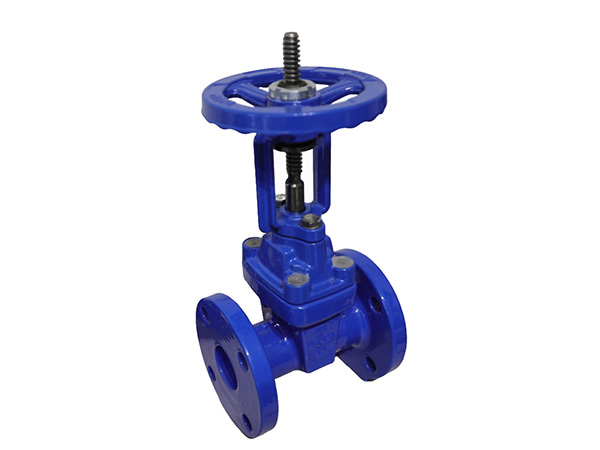
The valve stem is connected rigidly with the rubber-coated gate plate. When rotating the handwheel to open the valve, the stem moves upward synchronously and protrudes out of the bonnet; when fully closed, the stem retracts downward. Threads of the stem are exposed outside the valve bonnet. The lifting height of the stem directly corresponds to the opening degree of the gate, forming a visible position indicator.
Non-Rising Stem Resilient Seated Gate Valve
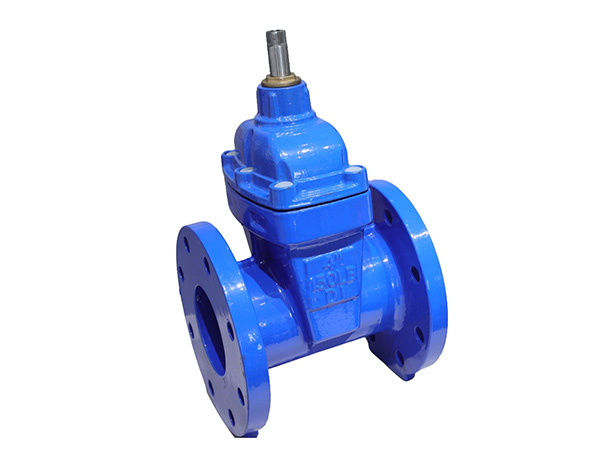
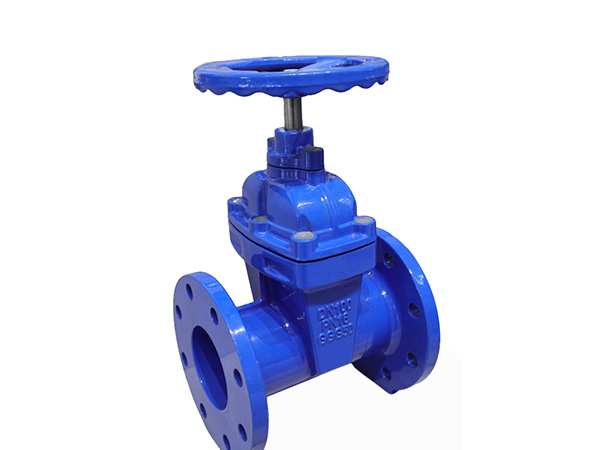
Its internal structure adds a transmission nut fixed inside the bonnet. The stem only rotates without vertical lifting during operation. The gate plate moves up and down driven by the internal nut, while the total length of the external stem stays unchanged all the time. All stem threads are sealed inside the valve body and will not stretch outward. There is no intuitive external reference to judge opening status.
2. Judging Opening Degree
Rising stem: Staff can directly observe the extended length of the stem to accurately judge fully open, half-open or fully closed state without additional auxiliary scales. Very friendly for regular patrol inspection of above-ground pump rooms.
Non-rising stem: Equipped only with a small dial indicator on the top of the handwheel box. Operators need to check the pointer scale to confirm opening position, which is not intuitive for quick visual inspection.
3. Installation Space Requirements
Rising stem: Requires sufficient vertical clearance above the valve for stem lifting stroke. It cannot be installed in narrow pipe shafts, shallow valve wells or buried underground, as the protruding stem will be blocked by ground covers and structures.
Non-rising stem: No extra vertical space needed above the valve. The overall height remains fixed, perfectly matching compact pipe shafts, underground buried pipelines and valve pits with limited depth.
4. Underground & Buried Pipeline Adaptability
Rising stem: Not suitable for burial. Exposed stem threads are easily corroded by underground moisture, sludge and rainwater; rusted threads cause jamming and failure to switch smoothly.
Non-rising stem: The fully enclosed stem structure avoids underground corrosion. It is the standard choice for municipal buried water supply mains, community underground branch pipes and underground fire pipelines.
5. Maintenance & Service Life
Rising stem: External threads are exposed to dust, water and corrosive air, requiring frequent regular lubrication and anti-rust maintenance. Once threads rust severely, the valve will get stuck. Its advantage lies in convenient packing replacement for shaft leakage without digging pipeline structures.
Non-rising stem: Internal threads are isolated from external environment, less prone to rust and long maintenance intervals. However, if internal transmission parts wear or get stuck, partial pipeline excavation is needed for disassembly and overhaul, increasing maintenance workload for buried pipes.
6. Application Scenarios Matching
Rising Stem Resilient Seated Gate Valve
Above-ground pump rooms, water treatment plants and waterworks equipment pipelines
Fire pump inlet and outlet pipelines in building basements
Outdoor above-ground exposed water supply pipelines with enough vertical space
Projects requiring frequent visual inspection of valve opening status
Non-Rising Stem Resilient Seated Gate Valve
Municipal urban buried water supply pipe networks
Underground valve wells of residential districts and industrial parks
Narrow vertical pipe shafts inside commercial buildings, hotels and apartments
Indoor and buried fire protection sprinkler & hydrant pipelines
7. Cost Comparison
Non-rising stem resilient seated gate valves have more complex internal transmission parts, leading to slightly higher production cost than the same size rising stem type. Rising stem models feature simpler internal structure and more competitive prices for above-ground projects.
Selection Summary
Choose rising stem resilient seated gate valve if the valve is installed above ground with enough vertical space and regular visual patrol inspection is required. Select non-rising stem resilient seated gate valve for buried pipelines, narrow pipe shafts and underground valve wells where vertical installation space is restricted.
1. APA 7th Edition
Gibson, M. (2022). Performance and application comparison of rising stem and non-rising stem resilient seated gate valves for water distribution systems. Journal of Pipeline Systems Engineering and Practice, 13(4), 04022031.
2. MLA 9th Edition
Gibson, Mark. "Performance and Application Comparison of Rising Stem and Non-Rising Stem Resilient Seated Gate Valves for Water Distribution Systems." Journal of Pipeline Systems Engineering and Practice, vol. 13, no. 4, 2022, p. 04022031,
3. GB/T 7714-2015
[1] Gibson M. Performance and application comparison of rising stem and non-rising stem resilient seated gate valves for water distribution systems[J]. Journal of Pipeline Systems Engineering and Practice, 2022, 13(4): 04022031.
 HOT PRODUCT
 CONTACT US