






Understanding Wafer Butterfly Valve Design and Function
Author:bohansi Time:2026-07-06 11:07:55 Click:84
Wafer butterfly valves represent one of the most compact and cost-effective valve designs available for fluid isolation in industrial piping systems. These quarter-turn valves have become ubiquitous across water treatment, chemical processing, HVAC, and general industrial applications where space efficiency, reliable operation, and competitive pricing are paramount requirements.
Fundamental Design Principles
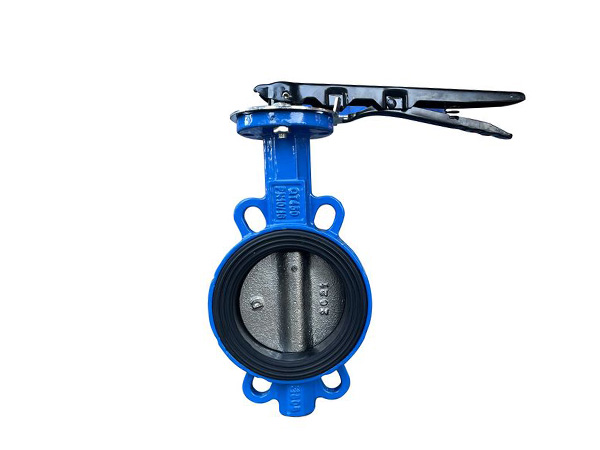
The defining characteristic of wafer butterfly valves is their slim profile design that fits between pipe flanges without requiring integral flanged ends. The valve body features a flat face with machined holes aligning with flange bolt patterns, allowing the valve to be sandwiched between mating flanges. A rotating disc mounted on a shaft passing through the body provides flow control – rotating 90 degrees from fully open to fully closed position.
Wafer versus Lug and Double Flanged Designs
Understanding wafer butterfly valves requires distinguishing between connection styles:
Wafer – Slim body fits between flanges; no threaded holes; cannot serve as end-of-line isolation
Lug – Threaded lugs enable bolting from one side; can isolate downstream with upstream pressure
Double flanged – Integral flanges for bolted connections to both sides
Wafer designs offer the most compact footprint and lowest cost, while lug designs provide additional functionality for maintenance isolation without requiring line shutdown.

Core Components and Construction
A wafer butterfly valve comprises several essential components:
Body – Typically cast iron or ductile iron; provides structural housing and flow passage
Disc – Stainless steel or coated ductile iron; rotates to control flow
Stem – Stainless steel shaft transmitting torque to disc; designs include one-piece and two-piece configurations
Seat – Elastomeric liner (EPDM, NBR, PTFE) providing sealing interface
Bearings – Support stem rotation; typically self-lubricating composite materials
Operator – Lever, gear, or actuator interface for valve operation
Advanced designs incorporate features such as fire-safe construction, cryogenic service ratings, and high-performance metal seating for severe applications.
Operating Mechanism and Flow Characteristics
Wafer butterfly valves operate through quarter-turn rotation of the disc. In the open position, the disc aligns with flow, creating minimal obstruction. As the disc rotates toward closed, it progressively restricts flow area until fully seated against the liner. Flow characteristics are approximately equal percentage – small disc movement at near-closed positions produces relatively small flow change, while the same movement near open produces larger flow changes.
Pressure and Temperature Ratings
Performance capabilities of wafer butterfly valves depend on design class and material selection:
Standard duty – 150-200 PSI at ambient temperature; suitable for general water service
Heavy duty – 250-285 PSI; engineered for more demanding applications
High performance – 300-740 PSI; double-offset or triple-offset designs for severe service
Temperature limits are determined by seat material, with EPDM suitable from -30°C to 120°C, while PTFE extends capability to 200°C for standard designs.
Advantages Over Alternative Valve Types
Wafer butterfly valves offer compelling benefits compared to gate, globe, or ball valves:
Space efficiency – Face-to-face dimensions typically 30-50% of gate valves
Weight reduction – 60-80% lighter than gate valves in comparable sizes
Cost advantage – Lower material and manufacturing cost, particularly above 6-inch sizes
Rapid operation – Quarter-turn actuation enables quick opening and closing
Automation ready – ISO 5211 mounting pads facilitate actuator installation
These advantages make wafer butterfly valves the preferred choice for large-diameter isolation where tight shutoff is acceptable and full-port flow is not required.
Applications Across Industries
Wafer butterfly valves serve diverse industrial sectors:
Water and wastewater – Isolation in treatment plants, distribution systems, and pumping stations
HVAC – Chilled water and heating hot water isolation in commercial buildings
Chemical processing – Compatible designs for corrosive and non-corrosive fluids
Power generation – Cooling water systems and auxiliary service isolation
Food and beverage – Sanitary designs for processing applications
Industry statistics indicate butterfly valves represent over 25% of all valve installations above 4-inch size, reflecting their economic and functional advantages.
Material Selection for Service Conditions
Specifying wafer butterfly valves requires matching materials to service requirements:
Body materials – Cast iron (general service), ductile iron (higher strength), stainless steel (corrosive service)
Disc materials – Coated ductile iron (economical), stainless steel (corrosion resistance), specialty alloys
Seat materials – EPDM (water, steam), NBR (oil resistance), PTFE (chemical resistance), Viton (high temperature)
Consult manufacturer chemical resistance guides to verify compatibility with specific process fluids.
Installation Guidelines
Proper installation ensures wafer butterfly valves perform as designed:
Install disc in near-closed position to prevent seat damage during handling
Use full-face flange gaskets rated for valve pressure class
Tighten flange bolts in alternating pattern to manufacturer torque specification
Ensure adequate clearance for disc rotation throughout full stroke
Verify flow direction matches manufacturer recommendations for single-offset designs
Improper installation accounts for the majority of butterfly valve performance issues in field applications.
FAQ
What is the difference between wafer and lug butterfly valves?
Wafer butterfly valves fit between flanges with bolts passing through the valve body, while lug valves have threaded holes enabling bolting from one side. Lug designs can isolate downstream piping with upstream pressure applied; wafer designs require pressure on both sides or closed flanges for end-of-line service.
Can wafer butterfly valves be used for throttling?
Standard wafer butterfly valves are designed for isolation service with limited throttling capability. For continuous throttling applications, characterized discs or control valve designs provide better performance and longer service life.
What causes butterfly valve seat leakage?
Common causes include trapped debris between disc and seat, seat compression from extended closure, thermal distortion from temperature cycling, chemical attack on seat material, and improper installation torque causing seat deformation.
Are wafer butterfly valves bidirectional?
Most modern wafer butterfly valves feature symmetrical discs and seats enabling bidirectional flow. However, some single-offset designs have preferred flow directions for optimal seating. Consult manufacturer documentation for specific valve orientation requirements.
What is the largest size available?
Wafer butterfly valves are manufactured in sizes from 2 inches through over 100 inches. Large-diameter applications typically utilize double-offset or triple-offset designs to manage operating torque and ensure reliable seating.
Conclusion
Wafer butterfly valves deliver exceptional value across industrial fluid handling applications through compact design, competitive pricing, and reliable quarter-turn operation. Understanding design principles, material options, and application requirements enables engineers to specify optimal solutions balancing performance, cost, and space efficiency. As industrial processes continue demanding higher performance in smaller footprints, wafer butterfly valve technology will remain central to efficient piping system design.
References
MSS. (2017). MSS SP-67: Butterfly Valves. Manufacturers Standardization Society.
API. (2021). API 609: Butterfly Valves: Double Flanged, Lug- and Wafer-Type. American Petroleum Institute.
Rahmeyer, W. (2002). Pressure Drop and Flow Characteristics of Butterfly Valves. AWWA Research Foundation.
ISA. (2019). ISA-75.08.01: Face-to-Face Dimensions for Flanged Butterfly Valves. International Society of Automation.
 HOT PRODUCT
 CONTACT US