






Different Types of Check Valves and Their Applications
Author:bohansi Time:2026-08-06 14:36:18 Click:134
A check valve is the quiet workhorse of any piping system: no actuator, no operator, no adjustment, just a mechanism that opens for forward flow and slams shut when flow reverses. Simple as that sounds, the design family contains more variety than most buyers expect, and choosing the wrong type shows up quickly as water hammer, chatter, or premature wear. Here is a practical rundown of the different types of check valves and where each one earns its keep.
Swing Check Valves: The Reliable Workhorse
The swing check is the most widely recognized design. A disc hinged at the top of the valve swings open on forward flow and drops back onto the seat when flow stops. Its low pressure drop makes it a favorite for pump discharge lines, water mains, and other services where efficiency matters and flow is fairly steady. The trade-off is response speed: the disc travels a long arc, so rapid flow reversal can produce noticeable water hammer, and in vertical or pulsating service the disc may flutter and wear its hinge. Most manufacturers rate swing checks for horizontal or upward-flow vertical installation only.
Lift Check Valves: Precision for Clean Media
Instead of swinging, a lift check valve raises a disc or ball vertically off the seat, guided by the body. Because the travel is short and controlled, response is quicker and sealing is tighter than a swing design. The catch is that the flow path is tortuous, creating higher pressure drop, and the valve needs clean media and, for disc types, a spring to assist closure. Lift checks appear regularly in steam lines, compressor discharge, and instrument air service where the media is clean and the system can absorb the pressure loss.

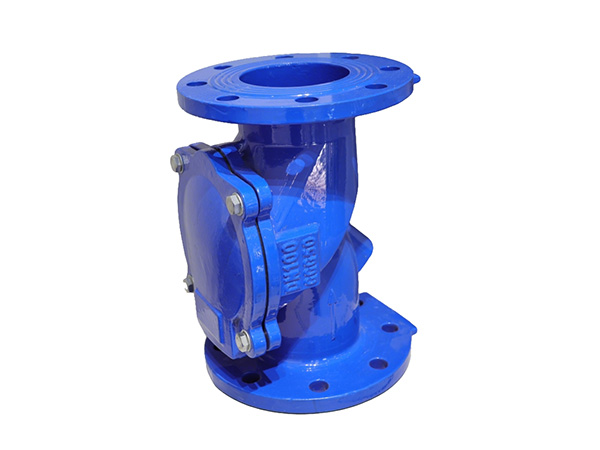
Wafer and Dual Plate Check Valves: Compact and Fast
Dual plate check valves, often installed between flanges in a slim wafer body, use two spring-loaded half-discs that close in a fraction of the time of a swing check. This speed is exactly what makes them valuable on pump discharge in HVAC, water, and process services where water hammer is a concern. Check valves in this category are light, cheap to install, and available in large diameters, but the spring and hinge pins live inside the flow stream, so heavily contaminated media can foul them. They suit clean to moderately dirty fluids and are a common specification in commercial and industrial building services.
Silent and Spring-Loaded Check Valves
Where water hammer is completely unacceptable, silent check valves, also called no-slamming or spring-loaded axial designs, take over. The closure element moves axially with the flow and a spring returns it to the seat before reverse flow develops, eliminating the pressure surge entirely. Municipal pumping stations, high-rise building booster sets, and process plants with sensitive equipment routinely specify them. The cost is higher than a swing check and the pressure drop is moderate, but for critical duty the protection is worth it.
Ball and Foot Valve Variants
Ball check valves use a free-moving sphere that seats against a machined opening; they handle slurries and viscous fluids well because the ball wipes the seat clean on closure. Foot valves are a special category of check valve mounted at the bottom of a pump suction line, keeping the pump primed when it stops. Many foot valves include a strainer screen as standard. Both designs are inexpensive and robust, which explains their popularity in agricultural pumping, transfer stations, and dredging support systems.
Matching the Valve to the Service
The starting point for selection is always the media and flow regime. Clean water with steady flow, a swing check is hard to beat on cost and pressure drop. Pump discharge with frequent starts, look at dual plate or silent designs to control surge. Steam or compressed gas, a spring-loaded lift check handles the higher velocities. Slurries and viscous fluids, ball checks resist clogging. Temperature and pressure ratings then narrow the field, and finally the installation orientation decides between horizontal-only designs like swing checks and the omnidirectional types like spring-loaded axial checks.
What Procurement Should Ask the Manufacturer
When sourcing from a manufacturer or supplier, request the closure time data, the maximum allowable reverse velocity, and the cracking pressure, the minimum forward pressure that opens the valve. Ask how the seat is sealed, metal-to-metal for high temperature or soft-seated for bubble-tight duty, and whether the design is field repairable. For critical applications, ask about testing: shell tests to API 598, seat tests to the same standard or ISO 5208, and spring certification for the closure mechanism. A supplier who cannot produce this documentation should raise a flag before the purchase order, not after.
Installation Mistakes That Shorten Valve Life
The most common field error is installing a swing check in a vertical line with downward flow, where the disc never seats properly. The second is ignoring orientation arrows, which matter for lift and spring-loaded types. The third is locating the check too far downstream of a pump, where transient conditions are more violent. Keep the check valve close to the discharge, respect the flow direction marking, and confirm the design matches your line orientation, and most premature failures disappear.
FAQ
What is the difference between a swing check and a lift check valve?
A swing check uses a hinged disc that swings on an arc, giving low pressure drop but slower closure. A lift check raises a disc or ball vertically, closing faster and sealing tighter, but at the cost of higher pressure drop and a need for cleaner media.
Which check valve type prevents water hammer best?
Silent or spring-loaded axial check valves close before reverse flow develops, virtually eliminating surge. Dual plate checks are the next best option, while swing checks offer the least protection against water hammer.
Can check valves be installed vertically?
Some can. Swing checks suit horizontal lines or vertical lines with upward flow, but not downward flow. Spring-loaded axial, ball, and many lift checks operate in any orientation, but verify the manufacturer's data sheet for your specific model.
Do check valves need maintenance?
Yes, though less than other valve types. Inspect the seat and closure element for wear and debris buildup, exercise the mechanism, and replace worn springs or seats before they fail. In dirty service, schedule inspection more frequently.
What is cracking pressure and why does it matter?
Cracking pressure is the minimum upstream pressure required to open the valve. Low cracking pressure suits gravity or low-head systems, while higher settings prevent fluttering in pulsating service. Match it to your system's available head.
Conclusion
The different types of check valves each solve a specific problem, whether it is keeping a pump primed, stopping reverse flow in a water main, or killing water hammer in a high-rise booster set. Swing, lift, dual plate, silent, ball, and foot designs all have their place, and the correct choice follows directly from media, flow regime, and installation orientation. Define those three parameters, ask the manufacturer for closure time and testing data, and you will specify a check valve that quietly does its job for decades.
References
Skousen, P. L., Valve Handbook, 3rd edition, McGraw-Hill.
American Petroleum Institute, API 598: Valve Inspection and Testing.
International Organization for Standardization, ISO 5208: Industrial Valves - Pressure Testing of Metallic Valves.
Nesbitt, B., Handbook of Valves and Actuators, Elsevier.
 HOT PRODUCT
 CONTACT US