






Benefits of Using Grooved End Butterfly Valves
Author:bohansi Time:2026-08-27 14:09:13 Click:73
Contractors under pressure to cut labor hours on a commercial job, and engineers trying to squeeze isolation valves into a crowded mechanical room, tend to arrive at the same solution independently. They reach for a grooved end butterfly valve. The appeal is straightforward: it installs faster than a flanged valve, it weighs less, it costs less in large sizes, and the grooved coupling it uses provides a degree of flexibility that rigid flanged joints simply cannot. Those four advantages add up quickly on a project with hundreds of valves, and they explain why grooved technology has become the default choice for commercial HVAC, fire protection, and industrial utility piping around the world.
The Grooved Connection: How It Works and Why It Matters
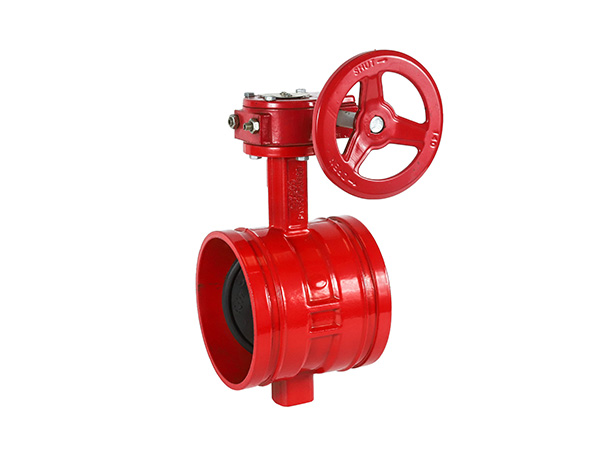
Instead of flanges that bolt together, a grooved end butterfly valve has a precision-machined groove on each end, typically to AWWA C606 or Victaulic specifications. A mechanical coupling, essentially a housing with a gasket and two bolt-and-nut assemblies, snaps over the grooves and draws tight. The gasket provides the seal while the coupling housing maintains the connection against system pressure. The entire assembly handles pressures up to 300 PSI in standard carbon steel configurations, with ductile iron bodies offering good impact resistance for buried and exposed installations alike. From a supplier standpoint, the groove is a machined feature rather than a casting, which means tighter tolerances and more consistent product quality across production runs.

Installation Speed That Cuts Labor Costs
Nobody on a job site wants to count bolts. A flanged valve of 150 mm typically requires eight to twelve flange bolts, two gaskets, and careful torquing in an alternating pattern, taking 20 to 30 minutes per joint in the field. A grooved end butterfly valve of the same size needs two couplings and about four minutes of assembly, with no torque wrench required beyond a simple spanner. Across a 200-valve project, that difference represents days of labor savings. This speed advantage is the single biggest reason contractors specify grooved valves on commercial projects, and it is the first thing procurement engineers notice when they compare installed cost estimates between grooved and flanged options.
Compact Footprint for Tight Installation Spaces
The slim profile of a grooved end butterfly valve saves space in two ways. First, the valve body itself is more compact than a flanged valve of the same nominal size. Second, the elimination of through-bolts and flange faces means the valve can be positioned closer to walls, adjacent pipes, and other equipment. For retrofit projects where the original installation left no spare clearance, this can mean the difference between a valve that fits and one that requires moving adjacent piping at significant cost. Plant engineers managing mechanical rooms in high-rise buildings find this compactness particularly valuable where every centimeter of ceiling height translates into usable floor space.
Flexibility and Vibration Damping
The mechanical coupling on a grooved end butterfly valve is not just a connection; it is a controlled-flexibility joint. The gasket and coupling design accommodate a small amount of angular deflection, axial movement, and radial separation, which means the assembly soaks up pipe movement from thermal expansion, vibration from mechanical equipment, and minor misalignment that would load a flanged joint. In practical terms, this flexibility reduces stress on valve body and bonnet joints, extends the life of adjacent equipment, and reduces the transmission of pump vibration through the piping system. On chilled water systems with variable speed drives, this damping effect measurably reduces noise and vibration in occupied spaces.
Lower Installed Weight and Handling Ease
Weight matters more than most procurement specifications acknowledge. A 200 mm grooved-end valve typically weighs 20 to 30 percent less than its flanged equivalent, which reduces the load on pipe hangers and structural supports, simplifies handling during installation, and lowers freight costs on large orders. For the installer working overhead in a high-rise mechanical room, that weight difference translates directly into easier placement and faster securement. A manufacturer who supplies both grooved and flanged lines can often help the project engineer optimize the valve schedule by mixing connection types where each offers the best advantage.
Maintenance Access and System Modifications
One underappreciated benefit of grooved technology becomes apparent when maintenance arrives. A grooved end butterfly valve can be removed and replaced without disturbing the adjacent pipe runs, because the couplings come apart and the valve simply lifts out. This is a significant advantage in buried or insulated service where accessing a flanged valve means cutting insulation and removing bolts from corroded flanges. For industrial plant operators managing turnarounds and shutdowns, the ability to swap a valve quickly without hot work or extended downtime is operationally valuable and directly impacts maintenance budget.
Fire Protection Applications
Fire protection is one of the most demanding markets for grooved technology, and it is where the performance credentials of grooved end butterfly valves have been proven most thoroughly. UL 262 and FM 1120 listing requirements specify design criteria for pressure rating, indicating operation, and tamper resistance that reputable manufacturers meet and document. The grooved connection has been approved for fire service mains for over eighty years, and the flexibility advantage takes on added importance in seismic zones where rigid flanged joints are vulnerable to pipe movement. Insurance carriers and authority-having-jurisdiction inspectors are familiar with grooved fire protection systems, which simplifies the approval process on most commercial projects.
FAQ
What sizes are available for grooved end butterfly valves?
Standard production runs from 2 inches through 24 inches, with some manufacturers offering fabricated designs up to 36 inches for large-diameter utility and cooling water applications. The most common project sizes fall between 4 and 12 inches.
Can grooved end butterfly valves be used for throttling?
They are primarily designed for isolation, not throttling. Partial opening at high differential pressure can cause the disc to vibrate and damage the seat. For flow control applications, a characterized disc or a dedicated control valve is the appropriate choice.
What coupling pressure rating matches the valve?
Standard couplings match valve pressure ratings up to 300 PSI. For higher pressure service above PN25, verify that the coupling manufacturer lists the specific valve body in their compatibility data, and consider a flanged alternative if grooved coupling ratings are insufficient.
Are grooved connections suitable for buried installations?
Yes, with the appropriate coupling specification. Buried service couplings use corrosion-resistant hardware, and the joint is typically wrapped with corrosion protection tape or shrink sleeve. Extended stems are available for valves that need to be operated from surface level.
What maintenance do grooved end butterfly valves require?
Minimal. The seat is resilient and tolerates debris well, the coupling gasket has a typical service life of 15 to 20 years in water service, and the disc and stem are designed for long life with periodic exercise. Annual cycling and periodic inspection of coupling bolt torque are generally sufficient.
Conclusion
Grooved end butterfly valves earn their popularity through a combination of practical advantages that add up across every stage of a project's life: faster installation and lower labor cost for contractors, compact dimensions and flexibility for engineers, lower weight and easier handling for installers, and reliable isolation with minimal maintenance for plant operators. The technology is well-established, standards are clear, and the manufacturing base is broad, which keeps quality product competitive in price. For anyone evaluating isolation valve options for commercial, industrial, or fire protection projects, grooved end butterfly valves deserve serious consideration as the default choice.
References
American Society of Heating, Refrigerating and Air-Conditioning Engineers, ASHRAE Handbook: HVAC Systems and Equipment.
National Fire Protection Association, NFPA 13: Standard for the Installation of Sprinkler Systems.
Skousen, P. L., Valve Handbook, 3rd edition, McGraw-Hill Education.
Underwriters Laboratories, UL 262: Standard for Gate Valves for Fire-Protection Service.
 HOT PRODUCT
 CONTACT US