






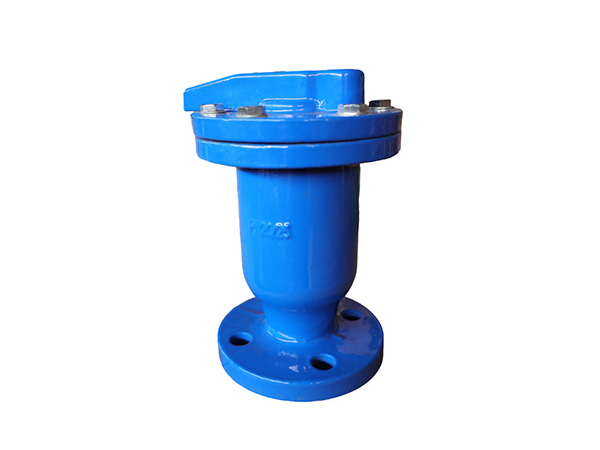
Compound Air Release Valve
Compound air release valve, also known as triple-function combined air valve, is a vital automatic pipeline fitting specially installed at peak points, long uphill sections and shut-off valve front ends of large water supply, sewage and water conservancy pipelines. It integrates three core functions: large-volume rapid air exhaust during pipeline filling, continuous micro venting of dissolved air under normal operation, and vacuum breaking during pipeline drainage, which single-orifice air release valves cannot fully realize. This all-in-one design effectively eliminates air pockets, suppresses water hammer, reduces pipeline vibration and protects pumps, valves and pipe fittings from damage caused by trapped air or negative pressure.
During initial pipeline water filling, massive air is sealed inside the empty pipe. The large exhaust orifice of the compound air valve fully opens to discharge bulk air rapidly. Once liquid rises and lifts the main float, the big outlet is tightly sealed to prevent medium leakage. In daily steady operation, a large amount of micro air separates from water and accumulates at the pipeline top. A tiny built-in vent hole keeps releasing these small air bubbles continuously without cutting off the main flow, avoiding the formation of air cushions that narrow flow passages, boost water delivery resistance and increase pump power consumption. When pipelines stop working and drain water, the liquid level drops, the main float falls, and outside air enters the pipe through the large orifice to balance internal and external pressure, eliminating vacuum suction that may deform plastic pipes or crack cast iron pipelines.
Structurally, the valve body is integrally cast with high-strength ductile iron EN-GJS-500-7. Inner and outer surfaces are covered with thick fusion-bonded epoxy coating over 250μm, anti-rust, anti-scaling and compliant with European drinking water hygiene standards. Inside the chamber are two independent floating components: a large stainless steel main float matching the big exhaust port, and a small auxiliary float equipped with a micro air vent. The sealing faces use high-elastic EPDM gaskets to achieve bubble-tight sealing under PN10 and PN16 working pressure. The split bonnet design allows convenient disassembly for sediment cleaning and component replacement without detaching the whole valve from the pipeline. No electric power or manual control is needed; the valve operates fully automatically relying on liquid buoyancy.
Standard specifications cover DN50 to DN300 with flanged connection complying with national and DIN industrial standards. Applicable media include tap water, fire-fighting water, raw river water, irrigation water and low-corrosion wastewater within 0–80°C. Each finished valve undergoes strict shell strength test at 1.5 times nominal pressure and air tightness inspection to guarantee zero water seepage under full operating pressure.
Compared with single orifice air release valves, compound air valves deliver more comprehensive protection and stable performance for medium and large-caliber long-distance pipe networks. They are widely applied in municipal main water supply pipelines, reservoir water conveyance tunnels, large agricultural irrigation trunk lines, sewage treatment plants and urban fire protection pipe networks. By maintaining stable pipeline pressure and smooth water flow, they lower energy loss, reduce maintenance frequency and greatly extend the service life of the entire fluid transportation system.
 BLOGS
BLOGS
-
Understanding Resilient Seated Gate Valves in Water Systems
2026-07-06 11:02:49
-
Metal Seated Gate Valves: Features and Industrial Applications
2026-07-06 11:00:39
-
What Are Hydraulic Control Valves and How Do They Work?
2026-07-06 10:58:09
-
What Makes Grooved End Gate Valves Popular in Piping Systems?
2026-07-06 10:53:41
CONTACT US