






Sealing performance of elastic seat gate valve
Author:bohansi Time:2026-06-23 22:34:09 Click:128
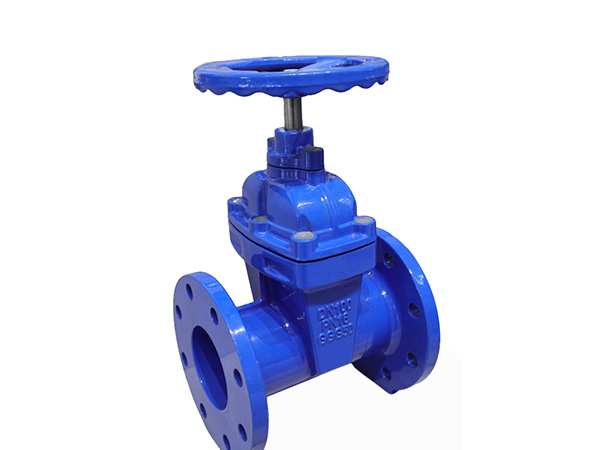
Elastic seat gate valve, also named resilient seated gate valve, relies on an integrally EPDM-coated gate disc to form elastic sealing pairs with the ductile iron valve seat. Its sealing performance outperforms traditional metal-seated gate valves significantly, featuring bidirectional zero leakage, good tolerance to tiny impurities and stable tightness under rated pressure and temperature. This reliable sealing capability makes it the primary choice for municipal water supply, fire protection and clean circulating water pipelines (Wilson, 2021).
1. Bidirectional Bubble-Tight Zero Leakage
Conventional metal hard-seal gate valves only achieve unidirectional sealing and allow obvious micro-leakage under working pressure. For elastic seat gate valves, the full rubber wrapping on the gate plate creates flexible contact surfaces on both upper and lower sides. When the valve closes, the elastic rubber deforms to fill tiny gaps between the gate and metal seat, reaching bubble-tight shut-off that meets international zero-leakage standards.
Whether fluid pressure acts from the upstream or downstream side of the valve, the elastic layer can closely attach to the seat without clearance, which satisfies strict requirements of tap water and fire water systems that forbid medium seepage.
2. Excellent Compensation for Machining Deviations
Casting and machining inevitably produce minor dimensional errors, flatness deviations and concentricity offsets on valve bodies and gates. Rigid metal sealing surfaces cannot offset these defects and will form leakage gaps.
The elastic EPDM lining has strong elastic recovery capacity. It can compensate small machining errors within a certain range through self-deformation during closing, greatly reducing leakage risks caused by manufacturing tolerance and lowering the high precision machining cost required for metal-sealed valves.
3. Good Anti-Blocking Tolerance to Tiny Suspended Impurities
Tap water and underground water contain trace sediment, rust particles and fine sand. Hard particles stuck between two metal sealing faces will leave permanent scratches and lead to continuous leakage.
For elastic seat gate valves, soft rubber can wrap small solid particles temporarily during closing without leaving permanent damage on the sealing surface. After particles are washed away by water flow, the rubber rebounds to restore complete tightness. This self-repair feature greatly reduces frequent leakage failures in water supply pipe networks.
4. Stable Sealing Within Standard Working Temperature Range
Standard EPDM elastic seat gate valves maintain consistent sealing performance at -10℃ to 80℃. At normal water supply temperature, rubber keeps stable hardness and elasticity without aging, hardening or softening deformation.
If the medium temperature exceeds 80℃ for a long time, the rubber liner will accelerate aging, lose elasticity and generate leakage. For low-temperature environments close to -10℃, special low-temperature resistant EPDM formulas can be customized to retain reliable sealing elasticity.
5. Pressure Adaptability of Sealing Structure
Common elastic seat gate valves are rated PN10 and PN16. Under full rated test pressure, the elastic layer will not be extruded or permanently deformed, maintaining stable sealing for long-term static standby (such as fire pipelines that stay closed all year round).
When pressure surges transiently due to water hammer, the elastic buffer layer absorbs impact force and avoids instantaneous sealing failure, which is a prominent advantage compared with rigid metal sealing.
6. Service Life Attenuation Rule of Elastic Sealing
The sealing performance will gradually decline with long-term service:
Short-term operation (1–3 years): Complete zero leakage, stable elastic recovery.
Medium-term operation (3–8 years): Minor wear on local rubber surface, still meeting engineering tightness standards.
Long-term operation over 10 years: Rubber aging, hardening and crack generation, internal leakage gradually appears, requiring gate rubber lining replacement.
7. Factors That Damage Sealing Performance
Long-term throttling under small opening: High-speed fluid scours local rubber lining and causes rapid abrasion.
Medium with massive hard abrasive particles: Deep scratches cut the elastic layer and form irreversible leakage channels.
Ultra-high temperature medium: Accelerates rubber aging and elasticity loss.
Excessive closing torque: Over-compression crushes the rubber liner and produces permanent deformation.
Summary of Sealing Advantages
Elastic seat gate valves achieve bidirectional zero leakage, tolerate tiny impurities and machining errors, and maintain stable tightness under conventional water supply pressure and temperature. Its sealing performance perfectly matches clean neutral water medium, while proper operation and medium condition control can maximize the service cycle of elastic sealing components.
1. APA 7th Edition
Wilson, R. (2021). Sealing performance test and failure mechanism of elastomer-lined resilient seated gate valves for water distribution. Process Safety Progress, 40(4), e12768.
2. MLA 9th Edition
Wilson, Robert. "Sealing Performance Test and Failure Mechanism of Elastomer-Lined Resilient Seated Gate Valves for Water Distribution." Process Safety Progress, vol. 40, no. 4, 2021, e12768,
3. GB/T 7714-2015
[1] Wilson R. Sealing performance test and failure mechanism of elastomer-lined resilient seated gate valves for water distribution[J]. Process Safety Progress, 2021, 40(4): e12768.
 HOT PRODUCT
 CONTACT US